
A Local Guide to Himalayan Bird Watching at South Gola Range (2026 Guide)
By Akash & Stone Heritage Team · Founder & Local Mountain Naturalists at Stone Heritage Mukteshwar · Updated July 2026
Surrounded by the dense oak, pine, and rhododendron forests of the South Gola Range, Mukteshwar is one of North India’s most celebrated, uncrowded havens for bird watchers and nature photographers. Sitting high at an altitude of 7,500 feet (2,286 meters), away from the commercial noise of busier hill stations like Nainital, the dense forest canopy shelters over 200+ native and migratory Himalayan bird species.
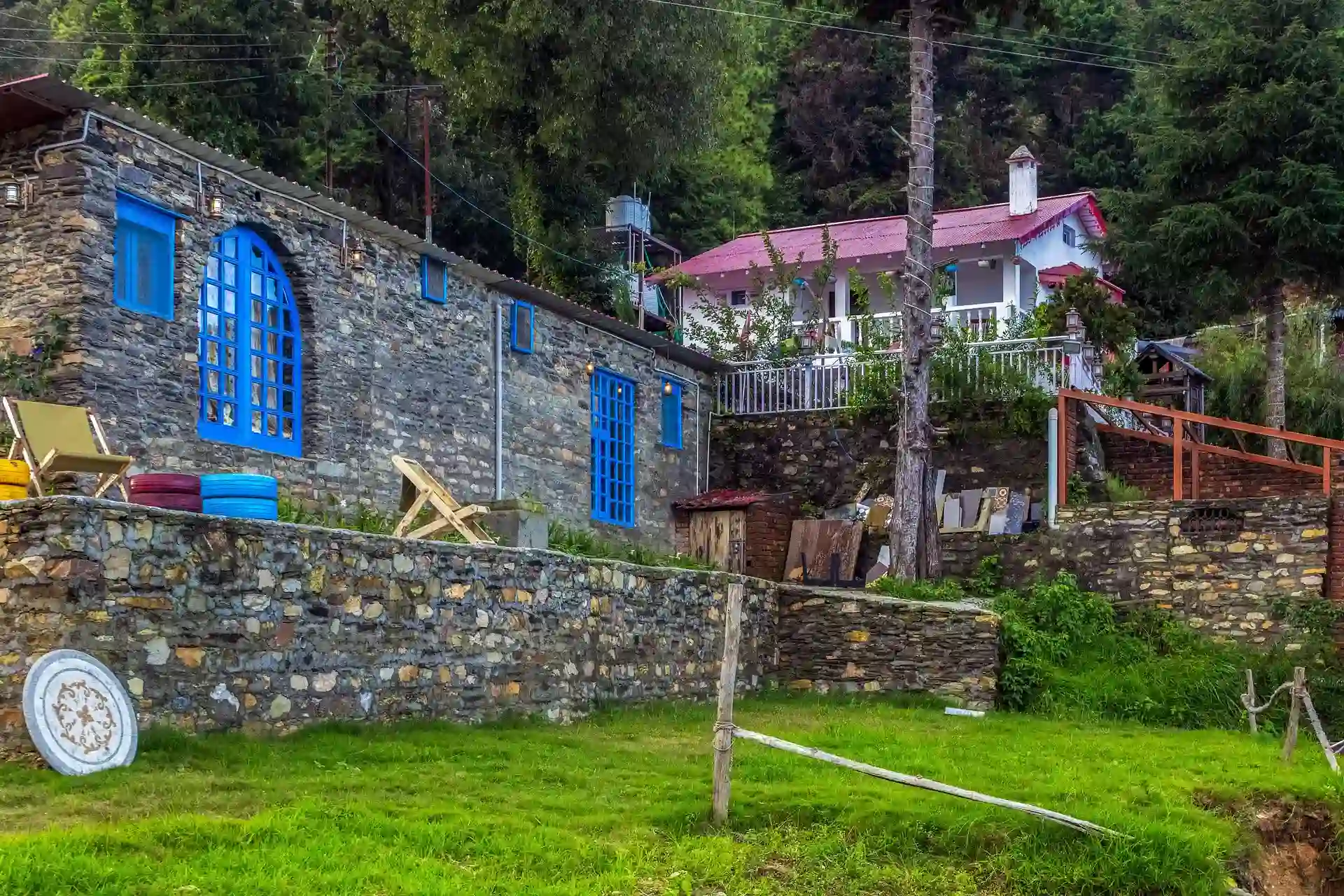
Whether you are a seasoned ornithologist armed with a telephoto lens or a casual nature lover sipping morning coffee on your private balcony at Stone Heritage Mukteshwar, birding here is an effortless, daily experience.
Himalayan Bird Species Checklist (South Gola Range)
Depending on the season, you can spot dozens of vibrant species without leaving the gardens of our heritage stone cottages. Here are the iconic species observed around Mukteshwar:
Species Identification & Spotting Guide
| Bird Species | Identification Features | Best Spotting Location | Season | Distinctive Call / Behavior |
|---|---|---|---|---|
| Blue Whistling Thrush (Kalij) | Deep violet-blue plumage, yellow beak | Homestay lawn & damp stream rocks | Year-round | Human-like melodious whistle at dawn |
| Verditer Flycatcher | Electric turquoise-blue body, black eye patch | Oak tree branches near balcony | March – Sept | Darting mid-air to catch insects |
| Himalayan Bulbul | Bright yellow vent, prominent black crest | Fruit trees in homestay orchard | Year-round | Social, cheerful chirping in flocks |
| Red-Billed Blue Magpie | Long trailing blue-white tail, red beak | Forest trail & garden lawn | Year-round | Striking gliding flight across valleys |
| Himalayan Griffon Vulture | Massive 8-foot wingspan, pale plumage | Soaring high above Nanda Devi peaks | Oct – March | Effortless thermal gliding |
| Koklass Pheasant / Kalij Pheasant | Glossy green head, barred tail feathers | Dense oak forest undergrowth | Early Morning | Deep drumming calls in pine needle cover |
| Great Barbet | Chunky green bird with heavy yellow bill | High canopy in fruit orchards | Summer | Loud, repetitive “pi-ho” echo across hills |
| Rufous-Bellied Woodpecker | Chestnut underparts, black-white barred back | Trunk of pine & oak trees | Year-round | Rhythmic wood tapping echoing through forest |
Top 4 Birding Hotspots Around Stone Heritage Mukteshwar
1. Stone Heritage Homestay Gardens & Fruit Orchards (On-Site)
You don’t need to trek for hours to spot rare birds. Our expansive green lawns and fruit orchards (plum, apple, peach) attract Himalayan Bulbuls, Verditer Flycatchers, Sunbirds, and Babblers right outside your cottage room. Sit on your private terrace at the Copper Room or Stonewood Family Retreat with your binoculars ready.
2. South Gola Range Forest Trail (Direct Forest Access)
Stepping out of our gates puts you directly on the quiet, traffic-free trail leading into the South Gola forest. Heavy oak and rhododendron canopy here provides ideal cover for Laughingthrushes, Nuthatches, Treecreepers, and the rare Koklass Pheasant.
3. Bhalu Gaad Waterfall Stream Walk (2 km Trek)
A gentle 2 km nature trek along a freshwater stream to Bhalu Gaad Waterfall (see our guide to the top 5 things to do in Mukteshwar). The damp streamside rocks and shade attract Forktails, White-capped Water Redstarts, and Plumbeous Water Redstarts.
4. Mukteshwar Reserve Forest & Kilmora Ridge
Located near Mukteshwar Dham Temple, this high-altitude ridge offers sweeping 180° views of the sky, making it the premier location for spotting raptors, Steppe Eagles, Kestrels, and soaring Himalayan Griffons.
Seasonal Birding Calendar: When to Visit
| Season | Bird Life Activity | High-Altitude Migrants & Highlights |
|---|---|---|
| Spring (March – May) | Peak Breeding Season | Active bird songs, vibrant plumage, Verditer Flycatchers & Barbets nesting in orchards. |
| Monsoon (June – Sept) | Nesting & Fledging | Lush green canopy, high insect activity, secretive forest species feeding young. |
| Autumn (Oct – Nov) | High-Altitude Descent Begins | Clear blue skies, soaring raptors, migratory flocks moving down from upper Himalayas. |
| Winter (Dec – Feb) | Winter Migration Peak | High-altitude species (Altitudinal Migrants) descend to 7,500 ft. Best time for pheasants & eagles. |
Gear & Ethical Birding Tips from Local Hosts
To enjoy an immersive, respectful birding experience in the Kumaon hills:
- Binocular Optics: An 8x42 or 10x42 binocular offers the best balance of field-of-view and brightness under forest canopies.
- Earth-Toned Clothing: Wear muted olive, brown, or beige jackets. Bright colors alert forest birds before you get close.
- Use Bird Identification Apps: Download Merlin Bird ID or eBird for offline audio call identification in Mukteshwar.
- Silent Observation: Move slowly along pine-needle paths and listen for rustling leaves. Often, you will hear a Blue Whistling Thrush or Woodpecker before spotting it.
- Pet Safety on Trails: If you are visiting with your dog (we are a fully pet-friendly homestay in Mukteshwar), keep them on a leash on forest trails to prevent disturbing ground-nesting pheasants.
Frequently Asked Questions (FAQs)
1. What is the best time of day for bird watching in Mukteshwar?
The Morning Chorus between 6:00 AM and 8:30 AM is the absolute prime window. As the first sunlight warms the oak canopy, birds actively feed and sing across the valley.
2. Can I spot birds directly from my room at Stone Heritage?
Yes! Our standalone stone cottages feature private balconies and lawn gardens facing forest orchards. Guests regularly spot 15 to 20 species daily directly from their room balcony while enjoying breakfast.
3. What is the best season for bird watching in the Kumaon hills?
While birding is rewarding year-round, October through April is exceptional due to clear skies, high visibility, and the arrival of winter altitudinal migrants from higher Himalayan passes.
4. Are guided nature walks available at the homestay?
Yes! Founder Akash and our local host team can recommend the best quiet forest routes or arrange local naturalists for guided morning bird walks around Bhatelia and South Gola Range.
5. What nearest station connect to Mukteshwar for birders?
Kathgodam Railway Station (KGM) is 62 km away (~2.5 hours by taxi). Read our detailed Delhi to Mukteshwar Road Trip Itinerary for complete travel routes.
Experience Himalayan Wilderness Direct
Disconnect from digital noise, step out onto your stone cottage porch, and let the morning song of the Blue Whistling Thrush welcome your day.
Explore our stone cottage rooms and book direct | Read our authentic host story | Learn about local experiences
About the Authors: Akash and the Stone Heritage team are local hosts, mountain naturalists, and guardians of Kumaoni heritage hospitality. Read our full host story →

Akash & Stone Heritage Team
Local host and mountain guide at Stone Heritage Mukteshwar. Sharing authentic Kumaoni travel guides, trekking routes, and mountain lifestyle insights.
Learn more about our hosts on Our Story →Follow Stone Heritage on Google
Add us to your preferred sources to get the latest Mukteshwar travel guides & updates.